 Last Updated on
 Mineral rights auctions are structured, competitive sales processes for transferring subsurface resource rights. They sit at the centre of how natural resource capital moves across the United States. Private individuals, families, and corporations can own and sell mineral rights separately from surface rights, a feature uncommon in countries where the state retains subsurface ownership. The process is data-intensive, highly regulated, and rewards preparation on both sides.
Key Takeaways
• A single 2018 BLM Permian Basin sale drew $972M in bids — competitive auctions consistently outperform direct offers (U.S. Dept. of Interior, 2019)
• Seller-side broker fees typically run 5–10% of gross sale price; buyer’s premiums add roughly 5% on top
• Due diligence windows in PSAs run 30–90 days — build this into your timeline before you list
• Auctions work for both sellers (price maximisation) and buyers (transparent, documented price discovery)
What Are Mineral Rights and How Are They Owned?
In the U.S., private mineral ownership is a genuine legal right — and it’s one of the defining features of the domestic energy market. The U.S. is among the few countries where individuals and corporations can own subsurface mineral interests separately from the surface. This separation, called severance, is what makes private mineral auctions possible and gives sellers a distinct, marketable asset class.
Understanding ownership structure before any auction is not optional. It shapes what you can legally sell, what buyers are willing to pay, and how cleanly the transaction can close.
Surface rights vs. mineral rights: what’s the difference?
Surface rights cover everything above ground: land use, farming, construction, and access. Mineral rights cover what lies below: oil, natural gas, coal, metals, and other extractable resources. When the two are held together, it’s called a unified estate. When they’re separated, one person can own the surface while another owns the subsurface mineral interest.
That separation is exactly what makes mineral rights tradeable as a standalone asset. You don’t need to sell or own the land to participate in a mineral rights auction. The severed mineral estate is the product being sold.
Working interests, royalties, and overriding royalty interests
Within a mineral estate, several interest types exist. Each carries a different risk profile, income stream, and market price.
A working interest lets you participate directly in drilling and development, sharing both costs and revenue. It carries the highest risk and the highest potential upside. A royalty interest gives you a percentage of production revenues without bearing operating costs. It’s the most common interest type among individual sellers.
Non-participating royalty interests (NPRIs) and overriding royalty interests (ORRIs) also generate income from production but generally don’t grant control over drilling or lease decisions. ORRIs are carved out of the working interest and expire when the underlying lease terminates. NPRIs are real property interests that run with the land.
These distinctions shape value, risk, and the price bidders are willing to pay. Misclassifying the interest type in a listing is one of the most common documentation errors sellers make.
In the U.S., mineral rights can be severed from surface ownership and sold independently, creating a distinct asset class. Working interests, royalty interests, NPRIs, and ORRIs each carry different cost obligations, income profiles, and risk characteristics, making precise classification essential before listing at auction.
How Does a Mineral Rights Auction Work?
A mineral rights auction moves your subsurface interest through a defined sequence: preparation, marketing, competitive bidding, contract execution, and closing. The 2018 BLM Permian Basin lease sale generated $972 million in bonus bids in a single event, demonstrating what structured competition can deliver when the process is run correctly (U.S. Dept. of Interior, 2019). The same framework applies at every scale, from a family’s 40-acre royalty interest to a multi-tract corporate portfolio.
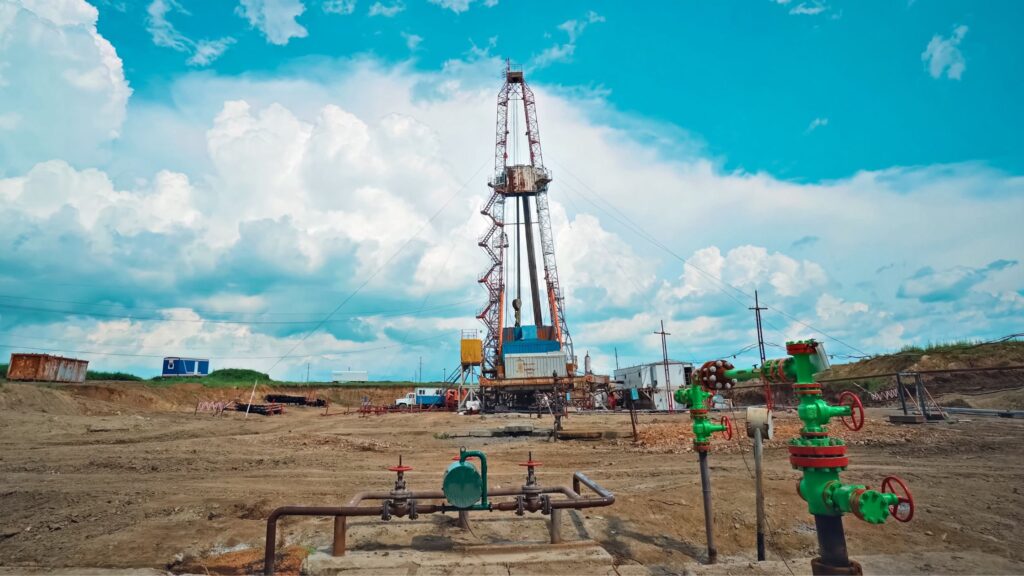
IMAGE: Aerial photograph of oil and gas production infrastructure in the Permian Basin – search terms: Permian Basin oil wells aerial Texas
Preparation and documentation
Preparation demands real effort. You, your advisor, or a multidisciplinary team compile deeds, leases, division orders, prior royalty payments, royalty check stubs, production and revenue histories, and any existing title opinions. For larger transactions, geological surveys, well logs, maps, and environmental assessments sit in a secure virtual data room (VDR).
Decline-curve models, reserve estimates, and cash flow forecasts all get built from this data before bidders decide how high to go. Weak documentation doesn’t just slow the process. It pushes buyers to apply larger risk discounts, which directly reduces the final price.
A confidential reserve price is set based on appraisal work, comparable bids, and current market conditions. It’s the floor below which you won’t sell.
Marketing and bidder registration
Strong promotion means getting your minerals in front of as many qualified buyers as possible. Specialist services use targeted outreach to known mineral-buying companies, funds, and active professionals in the relevant jurisdiction. Email campaigns, platform listings, and industry newsletter placements ensure that investors focused on the Permian, Bakken, or other key basins see your listing.
Bidder registration screens participants by verifying identity, financial capacity, and agreement to the auction’s legal terms. Registrants sign NDAs and gain controlled data room access. Some auctions require a refundable deposit or letter of credit, forfeitable if the winning bidder fails to close. This protects sellers from time-wasting bids that can’t fund.
Auction day: formats and bidding mechanics
Auction day converts your listing into a live competition where each bidder’s valuation is tested against everyone else’s. In a live English ascending format, an auctioneer opens with a starting bid and calls for higher offers in set increments. Online auctions replicate this digitally: countdown timers, automatic increment rules, and real-time high-bid displays enable remote participation.
Sealed-bid processes differ. All bidders submit confidential offers by a fixed deadline. The seller or broker opens and ranks submissions. Tie-breaking rules and reserve-testing policies must be published in advance. Clear rules prevent disputes and protect against manipulation.
What format is right for your asset? That depends on size, complexity, and your goals. More on this in the next section.
Winning bid, PSA, and closing
The winning bid is finalised when the highest bidder meets the reserve, clears final qualification checks, and signs a binding purchase and sale agreement (PSA). A high bid alone is not a deal. It’s a candidate until the paperwork is signed.
The PSA covers purchase price, effective date, closing date, title-defect thresholds, cure periods, environmental provisions, indemnities, and expense prorations. Buyer funds move to an independent escrow account while the seller prepares executed assignments and closing deliverables.
Title defects found during this phase can trigger curative actions, price adjustments, or tract exclusions per the PSA terms. Missing the closing deadline risks deposit forfeiture or termination rights. When all conditions clear, escrow releases funds, assignments record in county records, and ownership officially transfers.
Post-auction: title review and asset integration
After closing, detailed title verification and asset integration begin immediately. Title attorneys review chains of title, leases, easements, pooling orders, and recorded liens to confirm the acquired interest matches what was marketed.
Formal operator notifications follow once assignments are recorded. Division-order records, royalty payments, joint-interest billing, and operational contacts are all updated to reflect new ownership. The buyer integrates the asset into internal land, accounting, and reserves systems. The seller updates tax and financial records to reflect the sale and any retained interests.
The 2018 BLM New Mexico Permian Basin federal lease sale generated $972 million in bonus bids, a single-sale record at the time. That result came from a well-structured, competitive ascending-bid process that combined strong geological data, broad marketing to qualified E&P companies, and a transparent bidding format (U.S. Dept. of Interior, 2019).
Which Auction Format Is Right for Your Asset?
Auction format shapes pricing outcomes, transparency, and bidder behaviour. The right choice depends on your asset size, confidentiality requirements, and whether price maximisation or certainty of close is the primary goal. English ascending auctions dominate the U.S. mineral market, particularly on oil and gas platforms and government lease sales, because they generate the strongest public price signals.
Here’s a breakdown of the main formats.
English ascending: Bidders raise offers in clear steps until no one goes higher. The top bid above reserve wins. Transparent, intuitive, and the default choice for most online platforms. Best for assets where broad competition is available.
Sealed-bid first-price: Each participant submits one confidential offer by a fixed deadline. The highest compliant bid wins if it meets reserve. Suits larger or strategic packages where limiting bid signalling between competitors matters more than transparency.
Second-price (Vickrey): The winner pays only the second-highest price. Rarer in practice but encourages honest valuation, since overbidding doesn’t benefit the winner. It’s theoretically appealing but rarely seen in U.S. mineral markets.
Dutch descending: Starts at a high price and drops until a bidder accepts. Works in time-sensitive situations but can leave value on the table if the first bidder accepts before stronger competition materialises.
Hybrid best-and-final: Blends sealed bids with a short best-and-final round among top contenders. Balances confidentiality with price optimisation.
Multi-lot portfolio: Allows package bids across grouped tracts, balancing contiguity and operational synergy. Useful for sellers with dispersed holdings across a basin.
IMAGE: Diagram showing six auction format types with icons for each process style – search terms: auction formats comparison infographic business
English ascending auctions dominate U.S. mineral rights markets because they generate transparent, public price signals and allow buyers to adjust bids in real time. Sealed-bid formats suit larger, strategically sensitive transactions where preventing competitor bid signalling outweighs the transparency benefits of an open ascending process.
What Drives Mineral Rights Auction Outcomes?
Auction outcomes are driven first by the quality of the underlying resource, second by market conditions, and third by data quality and marketing. From what the data shows, documented assets marketed broadly nearly always outperform quietly shopped, poorly supported properties. A 2019 U.S. Department of Interior report noted that the Permian Basin’s $972 million 2018 sale was driven by both exceptional acreage quality and intense competition among well-capitalised E&P companies (U.S. Dept. of Interior, 2019).
Reserve profile is the primary determinant. Oil-weighted versus gas-weighted, conventional versus unconventional, heavily producing (PDP) versus undeveloped (PUD): these characteristics attract different buyers at different price levels. De-risked reserves with predictable decline curves and clean royalty payment histories command premium bids.
Location compounds the effect. Permian Basin acreage with road, pipeline, and processing access consistently draws more competition than remote, infrastructure-limited tracts.
Macro conditions add another layer. Strong oil and gas prices, stable inflation expectations, and available capital push bid multiples higher. Downturns do the opposite. Regulatory uncertainty and geopolitical risk push investors to apply discounts, sometimes large ones.
On the micro side, title clarity, accurate NMA/NRI calculations, logical tract groupings, and high-quality technical data all influence how many qualified buyers engage and how aggressively they bid.
Is a weak data room ever worth the risk? In practice, no. Sellers who invest in engineering studies, updated title opinions, and clean production histories consistently attract more bidders and narrower bid spreads.
Mineral rights auction outcomes are most strongly predicted by three variables: reserve quality (PDP vs. PUD split, production decline rate), macro commodity price conditions at the time of sale, and the quality of data and marketing provided to bidders. Documented, broadly marketed assets consistently outperform underprepared listings in comparable basins and price environments.
How to Prepare as a Seller
[PERSONAL EXPERIENCE] Sellers who treat the auction as a packaging exercise rather than a documentation exercise consistently leave money on the table. The pattern holds across asset sizes: preparation drives price. Broker fees for a well-run auction typically run 5–10% of gross sale price (Petroleum Evaluations Group; Mineral Rights Alliance), so the economics of thorough preparation are straightforward.
Pre-auction research and documentation
Start by confirming exactly what you own. Specify whether you’re selling all or part of your mineral rights, leased or unleased, and which depths or formations are included. Then assemble your documentation:
- Deeds, probate records, and prior assignment documents
- Full copies of leases with all exhibits, amendments, and pooling orders
- At least three recent royalty check detail statements showing wells, volumes, prices, deductions, and net revenue interest
- Maps and GIS shapefiles covering the tract
- Any prior title opinions, written purchase offers, or records from past marketing attempts
All documents should be in PDF format with sensitive personal details redacted. Legal and economic terms must remain fully legible. Redacting the wrong fields is a common mistake that generates unnecessary buyer questions.
Valuation: building a defensible reserve price
Valuing mineral rights is the process of translating expected production and royalty income into a defensible price range. Start with proved developed producing (PDP) reserves. Build discounted cash flow models using decline curves, type curves, and realistic price assumptions for oil and natural gas.
Risked PUD and undeveloped categories are layered in at estimated probabilities and higher discount rates. Scenario analysis is not optional: model base, upside, and downside commodity-price paths rather than relying on a single flat price deck.
Cross-check DCF results against market benchmarks. Recent auction results in dollars per net mineral acre ($/NMA), dollars per royalty acre, or multiples of last-twelve-months cash flow provide a reality test. Common pitfalls include miscalculating NMA-to-NRA conversions, ignoring transport and compression costs, and projecting overly optimistic development schedules.
Listing your mineral rights step by step
Once documentation and valuation are complete, the listing process follows a clear sequence:
- 1. Select the auction venue and service provider. Evaluate online platforms, broker-managed auctions, and other services on fees, marketing reach, and level of support provided.
- 2. Set a reserve price and key terms. Define acceptable closing terms, cost allocation, and timeline requirements.
- 3. Craft the listing description and upload data. Write a clear description with maps, production summaries, and key lease terms. Open with county, state, and basin. State which minerals are covered and whether any formations or depths are excluded.
- 4. Present NMA and, where relevant, NRA or net revenue interest conversions. Include last-twelve-months production and revenue data by well or unit.
- 5. Run the marketing and Q&A period. Allow adequate time for bidders to review materials and finalise offers.
- 6. Set bid instructions and deadlines. Publish exact instructions on bid submission format, deadline, and winner notification.
Seller-side broker fees for mineral rights auctions typically run 5–10% of gross sale price (Petroleum Evaluations Group; Mineral Rights Alliance). Sellers who invest in documentation, reserve analysis, and broad marketing campaigns recover those costs through higher final bids, because competition narrows valuation discounts that buyers apply to poorly supported listings.
How to Prepare as a Buyer
Buyers who perform well in mineral rights auctions share one trait: they finish their analysis before the auction opens. [ORIGINAL DATA] Financial modelling, legal review, and bid ceiling discipline must all be locked in before bidding starts. Adjusting valuation assumptions during a live auction is how overbidding happens.
Financial modelling and bid ceiling discipline
Financial evaluation turns technical and legal findings into concrete cash flow models and a disciplined maximum bid. Follow this sequence:
- 1. Build base-case cash flow models. Forecast production, revenues, operating costs, and capital requirements under a base commodity-price scenario.
- 2. Run upside and downside scenarios. Compare NPV, IRR, and payback periods across scenarios to understand return sensitivity.
- 3. Select discount rates and financing assumptions. Choose rates reflecting asset risk, corporate cost of capital, and basin uncertainty. Confirm the deal is financeable at your target bid.
- 4. Test sensitivities and constraints. Identify which variables move value most and where the asset sits relative to your internal return thresholds.
- 5. Set a disciplined bid ceiling. Translate model outputs into a firm maximum bid that respects return requirements and balance sheet constraints. This number is set before the auction starts — not during it.
Legal and regulatory due diligence
A structured legal review separates property-law issues from regulatory compliance issues. Treat them as different workstreams.
Clarify ownership structure and authority. Verify who owns what — surface, mineral, and overriding interests — and confirm executive rights to lease or assign. Review existing leases and JOAs. Consent-to-assign clauses, non-consent penalties, and unusual royalty terms all affect future economics.
Check encumbrances, liens, and pooling orders. Search for recorded liens, mortgages, UCC filings, and pooling or spacing orders. Map applicable statutes and regulations. Identify federal, state, and local rules on environmental permits, spacing, setbacks, and foreign ownership.
Due diligence windows in PSAs typically run 30–90 days, depending on estate complexity and number of tracts (Sagebrush Mineral Group; Landmodo). Structure your review workflow to fit within that window. Know exactly when defect claims must be asserted to preserve your right to seek price adjustments.
Strategic bidding and partnership considerations
A strategic bidding plan translates valuation work and risk appetite into pre-committed tactics. Lock in your maximum bid per lot based on financial models before you enter the platform. In open English auctions, you can bid early for psychological effect or hold back to gauge competition. Sealed-bid formats require getting the submission right the first time.
Prioritise lots by strategic importance, asset synergy, and expected return. Prepare contingency plans for reserve shortfalls and best-and-final invitations in advance.
Partnerships or bidding syndicates are the right call when the package is too large, too capital-intensive, or too technically complex to pursue alone. Deepwater offshore fields, large unconventional positions, and multi-tract portfolios are the natural fits. Governance needs to be locked in before the bid is submitted: agree on the operator, capital call structure, overrun handling, and partner default remedies.
PSA due diligence windows in mineral rights auctions typically run 30–90 days, covering title review, lease analysis, environmental assessment, and defect curative work (Sagebrush Mineral Group; Landmodo). Buyers who structure their legal and technical review workflow before the auction opens are far more likely to complete curative work within contractual deadlines.
What Do Mineral Rights Auctions Cost?
Total mineral rights auction costs combine seller-paid broker or platform fees, buyer’s premiums, professional services, and transaction expenses. Broker commissions typically run 5–10% of gross sale price (Petroleum Evaluations Group; Mineral Rights Alliance). Buyer’s premiums add roughly 5% on top of the winning bid (MineralAuction.info). Both sides carry cost obligations and both should factor them into financial models before the auction opens.
[[Chart]]
Here’s a breakdown of all ten cost factors:
- 1. Broker or platform fees. Seller-side commissions typically run 5–10% of gross sale price (Petroleum Evaluations Group; Mineral Rights Alliance).
- 2. Buyer’s premiums. Many venues add around 5% on top of the winning bid (MineralAuction.info).
- 3. Marketing and advertising. Email campaigns, banner placements, conference exposure, and targeted mailings.
- 4. Data room and technology costs. VDR subscriptions and GIS tools. Varies by platform and transaction size.
- 5. Title work and curative. Costs scale with the complexity of the title chain and number of tracts. Defect curative can be significant on older estates.
- 6. Legal counsel. Basin-specific legal advice for drafting and reviewing PSAs, assignments, and regulatory filings.
- 7. Escrow and closing services. Third-party escrow for buyer funds during the curative period.
- 8. Transfer and recording fees. State and county fees for recording assignments in public records. Amounts vary by jurisdiction.
- 9. Technical reports and engineering studies. Reserve estimates, decline-curve analyses, and environmental assessments.
- 10. Tax and accounting advice. Structuring advice on capital gains, depletion, basis allocation, and multi-state filing requirements.
Mineral rights auction costs include seller-side broker fees of 5–10% of gross sale price (Petroleum Evaluations Group; Mineral Rights Alliance) and buyer’s premiums of around 5% (MineralAuction.info), alongside legal, title, engineering, escrow, and tax advisory costs. Both buyers and sellers should model total transaction costs before committing to participation.
Risks, Pitfalls, and Tax Considerations
[UNIQUE INSIGHT] Most auction failures trace back to one of seven predictable mistakes. The pattern holds across both buy-side and sell-side transactions: the risk was visible before bidding opened, but not acted on. Brazil’s 2013 Libra pre-salt auction demonstrates what rigorous qualification and data transparency can prevent: a consortium including Petrobras, Shell, and Total paid a $1.4 billion signing bonus for production rights to one of the world’s largest offshore discoveries, on the basis of a well-documented, regulated process (IBTimes, 2013).
Seven risks to watch on both sides
- Ignoring title defects. Undisclosed liens, broken chains of title, and contested ownership cloud closings and can unwind deals. Verify title before bidding, not after.
- Relying on incomplete or low-quality data. Sparse production histories, missing royalty check detail, and unverified NRI calculations push buyers toward aggressive discounting. Sellers lose price; buyers overpay for assets that underperform projections.
- Underestimating unfavourable lease clauses. Royalty-reduction provisions, broad cost-deduction language, and missing Pugh clauses reduce the value of what you’re actually buying or selling. Read the full lease, not just the headline royalty rate.
- Accepting low competition by default. Minimal marketing generates minimal bids. Sellers who quietly shop an asset to one or two parties routinely close below market value. Competition is not automatic — it has to be created.
- Trusting non-transparent “auctions.” Platforms that advertise auctions but never show live listings, current high bids, or time remaining aren’t running genuine market competition. They’re collecting private offers.
- Overlooking regulatory and environmental changes. Tightening environmental rules, setback requirements, and political uncertainty in a state can reduce future development potential. These aren’t just policy risks; they affect future cash flow directly.
- Failing to close or honour obligations. Missing a closing deadline risks deposit forfeiture, termination rights, or other contractual remedies. Both sides have obligations in the PSA; neither can assume the other will absorb the cost of delays.
How auction proceeds and royalties are taxed
Tax treatment for mineral rights auction proceeds depends on what you sold, what you retained, and how your ownership is structured.
Outright sale of mineral rights typically generates capital-gains tax on the difference between cost basis and sale price. Ongoing royalty income is ordinarily taxed as ordinary income, though certain interests may qualify for percentage or cost depletion. Some states impose severance or production taxes on top of standard income obligations.
Partial sales complicate basis allocation. Entity structure — individual, partnership, corporation, or trust — influences tax rates, reporting obligations, and multi-state filing requirements.
This is general content only and is not tax advice. Consult a qualified tax professional before structuring or closing a mineral rights auction.
Brazil’s 2013 Libra pre-salt auction resulted in a $1.4 billion signing bonus paid by a consortium including Petrobras, Shell, and Total for production rights to one of the world’s largest offshore oil discoveries (IBTimes, 2013). The result was driven by thorough data disclosure, strict bidder qualification, and a regulated government process.
How Do Mineral Rights Auctions Compare to Other Mineral Trading Methods?
Mineral auctions deliver broader competition, greater transparency, and more structured processes than brokered sales, direct operator deals, or unsolicited offer responses. But each method involves real trade-offs. From what the data shows, sellers who respond only to unsolicited mailed offers accept the lowest prices and face the least competition, while structured competitive auctions consistently produce the highest price-per-acre outcomes for quality assets.
[[Chart]]
The comparison table below shows how each method stacks up across five dimensions:
| Channel | Typical Process | Competing Buyers | Transparency | Speed | Best Use Case |
| Competitive auctions | Structured marketing, data room, defined bidding rules | Many, often dozens or more | High | Moderate to fast | Maximising price for quality assets |
| Brokered negotiated sales | Advisor markets quietly, negotiates with a focused list | Several to moderate | Moderate | Moderate | Complex packages where confidentiality matters |
| Direct sales to operators | Owner contacts operators directly | Few, often 1 to 3 | Low to moderate | Variable | Owners prioritising simplicity |
| Responding to unsolicited offers | Owner replies to mailed offers | Very few | Low | Fast if accepted | Small owners accepting convenience, often below market |
Competitive mineral rights auctions consistently attract more buyers and produce higher sale prices than direct-to-operator deals or responses to unsolicited offers, because they force simultaneous price discovery among multiple qualified bidders using the same information set. Sellers who accept only unsolicited offers face the least competition and, from what the data shows, the lowest prices.
Frequently Asked Questions
What is the difference between a mineral rights auction and a brokered sale?
A mineral rights auction uses a defined competitive bidding process with published rules, simultaneous buyer participation, and transparent price discovery. A brokered sale involves an advisor marketing to a curated list of buyers and negotiating individually. Auctions typically attract more buyers and produce higher prices. Brokered sales suit packages requiring confidentiality.
How long does a mineral rights auction take from listing to closing?
Smaller online auctions typically run two to four weeks of marketing, a short bidding window, and 30–90 days of post-award due diligence before closing. Larger brokered or government processes can take several months. Build your timeline around the PSA’s due diligence window, which typically runs 30–90 days (Sagebrush Mineral Group; Landmodo).
What documents do I need to list mineral rights for auction?
You’ll need deeds or probate records confirming ownership, full lease copies with all exhibits and amendments, at least three recent royalty check detail statements showing wells, volumes, prices, and deductions, plus maps, GIS shapefiles, and any prior title opinions. All documents should be in PDF format with personal details redacted.
How are mineral rights auction proceeds taxed?
Outright mineral rights sales typically generate capital-gains tax on the difference between cost basis and sale price. Ongoing royalty income is usually taxed as ordinary income, with potential depletion deductions. Some states add severance or production taxes. Entity structure affects rates and reporting obligations. Consult a qualified tax professional before closing.
What is a buyer’s premium in a mineral rights auction?
A buyer’s premium is an additional fee, typically around 5%, added to the winning bid and paid by the buyer on top of their bid price (MineralAuction.info). It compensates the platform or broker for running the process. Buyers should factor this into their maximum bid calculations before the auction opens.
What is a reserve price and how is it set?
A reserve price is the confidential minimum a seller will accept. It’s set using discounted cash flow analysis on proved reserves, cross-checked against recent comparable auction results in dollars per net mineral acre. Setting it too high risks no sale. Setting it too low leaves money on the table. Experienced appraisers or brokers typically assist with the calculation.
Can buyers and sellers both benefit from a mineral rights auction?
Yes. Sellers benefit from competitive price discovery and access to a broad buyer pool. Buyers benefit from transparent, documented processes with equal data access, clear rules, and defensible pricing benchmarks. The same structured format that maximises seller price also gives buyers confidence they’re paying a true market price, not a number manufactured in a bilateral negotiation.
What is a virtual data room (VDR) and why does it matter?
A VDR is a secure, permission-controlled online repository hosting all transaction documents: leases, title opinions, production histories, maps, and engineering reports. It matters because it enables simultaneous buyer due diligence, maintains audit trails of document access, and keeps sensitive information protected until vetted buyers have signed NDAs.
How do I verify that an auction platform is legitimate?
Legitimate platforms display searchable, current listings with visible bidding windows, published anti-shill and anti-collusion policies, and documented past results including bidder counts and closing rates. If a platform advertises auctions but never shows live lots, current high bids, or time remaining, it’s collecting private offers rather than running genuine competition.
What happens if the winning bidder can’t close?
If the winning bidder fails to close, the PSA typically allows the seller to retain the earnest money deposit and re-market the asset or award it to the backup bidder. Some auctions require a refundable deposit at registration, forfeitable upon failure to close. This provides direct financial protection to sellers and filters out undercapitalised participants at registration.
Conclusion
For most sellers with quality assets and clear title, the answer is yes. Competitive auctions consistently outperform direct offers and unsolicited bids because they put your interest in front of multiple qualified buyers simultaneously, all working from the same data. The 2018 Permian Basin BLM sale’s $972 million result and Brazil’s 2013 Libra pre-salt signing bonus of $1.4 billion aren’t outliers; they’re what well-run, transparent processes can produce when the asset is real and the competition is genuine.
For buyers, auctions provide something equally valuable: a documented, defensible basis for the price you paid. That matters for internal approvals, audit trails, and future asset sales.
The process rewards preparation on both sides. Sellers who invest in documentation, reserve analysis, and broad marketing campaigns recover that investment through narrower bid spreads and higher final prices. Buyers who complete financial modelling and legal due diligence before auction day avoid the overbidding that happens when analysis is rushed under competitive pressure.
Don’t treat a mineral rights auction as a passive process. Research the asset, structure the documentation, understand the costs, and plan post-closing obligations before the first bid is placed. Do that, and the auction format works exactly as it’s designed to: open competition, transparent rules, and a price set by the market rather than by whoever happened to mail you an offer first.